Buying less doesn’t mean having less
This year I’ve been experimenting with my purchases.
I decided to ban some brands from my wallet. I realised that, so often, when I buy something from a high-street brand, I end up selling it on Vinted less than a year later. Who needs that? Not a minimalist-perfectionist like me. And I definitely don’t want to contribute to producing more clothes that end up on garbage piles, or to systems built around poorly paid labour.
For a long time, I have had a wishlist of things I want to buy later — either “when the right time comes”, “when it’s on discount”, ‘when I’m rich”, or “probably never, but I will always love it”. I decided to break the pattern. Once in a while, not that often, I buy something from that list. And it makes such a difference:
I am completely satisfied with the piece — it’s so me, as it’s passed the time test, having survived on my wishlist for a while.
I get to own something by a designer whose talent I admire, or from a brand whose philosophy I appreciate.
It’s relatively timeless. It’s not a cheap trendy fast-fashion thing, but something that complements my personal style.
The fabric, the construction and the overall quality are better.
And I guess subconsciously, when I’ve invested more in a piece, I take better care of it, to help it serve me for longer.
When I shop with clients, I always try to show them that it’s worth investing not in “special pieces” they’ll wear on special occasions, but quite the opposite. If you wear something often in your everyday life, it’s worth spending more on. It’s the way the garment feels when you put it on, the fabric that you live in, how it keeps its shape over time, how it continues you. There’s a kind of everyday luxury in that. You just feel different. And the price of a piece is relative. If it’s hanging in your wardrobe just to look pretty there — do you really want to pay for it?
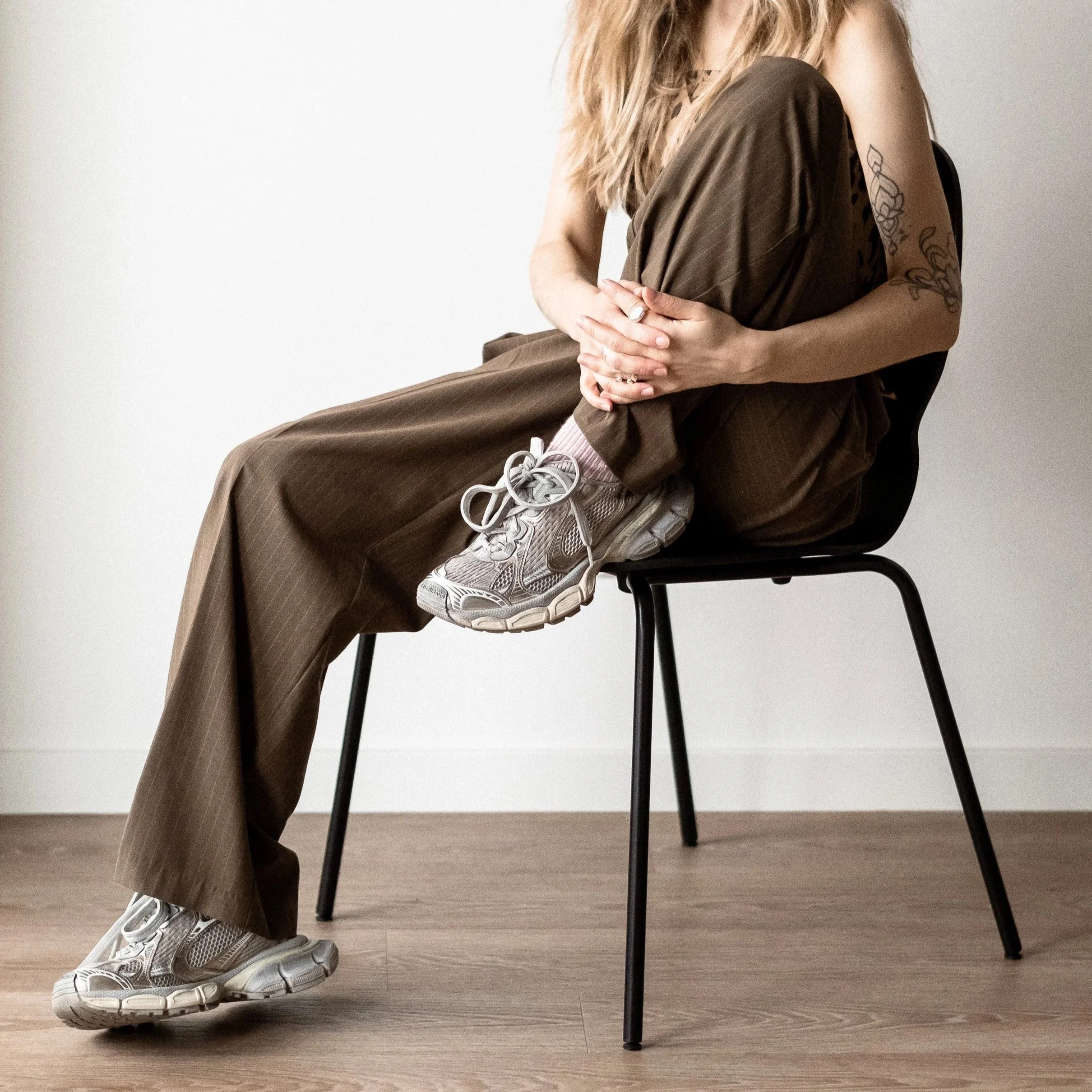
Two years ago, I bought a pair of sneakers for almost 900 euro. When the right time came, obviously. I remember thinking: OMG, it’s too much for sneakers.
But they were completely me.
I’ve worn them roughly 350 days out of the 700 that have passed since then. That makes the cost per wear around 2.60 so far. They’re still in great condition, and maybe I’ll eventually wear them 900 times.
I’m not telling you to go and buy a luxury item, not at all. But I’m saying that less but better can mean more.
I’ve been tracking my clothing expenses, and this year, with a few more expensive purchases, I’ve been spending less overall. Do I have fewer things? Yes. Do I have nothing to wear? Of course, I say that sometimes, but then I get creative and make a new combination out of what I have. And that makes me happy, because I believe things should be used, not just owned.
Sometimes buying less doesn’t mean having less. It can mean having more of what is actually yours.
May your wishes come true,
Maria